
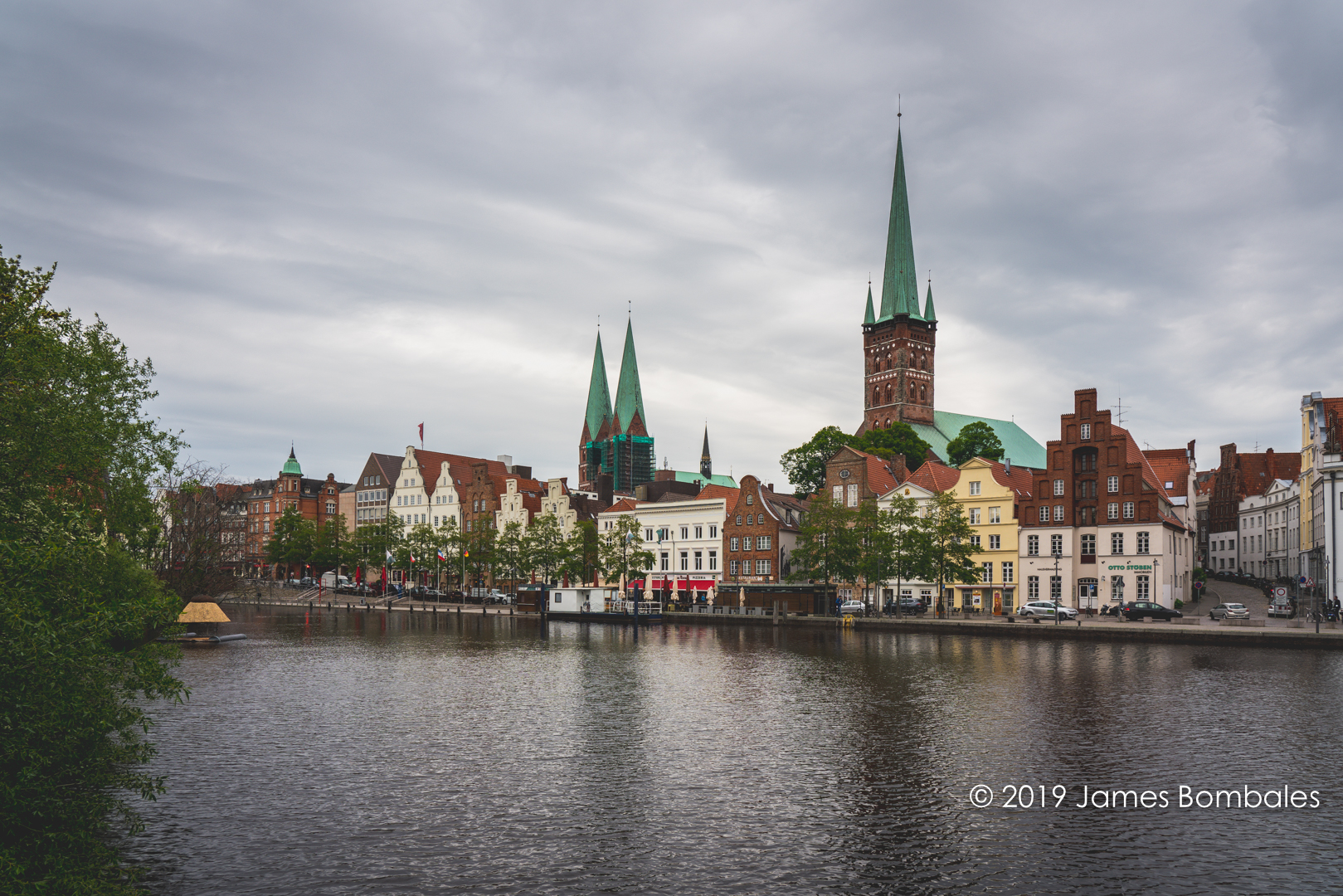
Located just 45 minutes from Hamburg Central Station in northern Germany, Lübeck is a 12th-century town filled with old-world charm, delicious food (renowned for its marzipan) and beautiful architecture. Lübeck is rich in history having been the leading city of the Hanseatic trade league from the 12th to the 17th century and its Old Town is listed as a UNESCO World Heritage site. It’s also a photographers paradise with its cobblestone streets, unique facades and adorable alleyways. Plus, its compact size and pedestrian-friendly streets makes it easy to navigate and explore. If you have plans to visit Lübeck (and you probably should), here’s a look at some of my favourite spots for the best photographs.
Holstentor
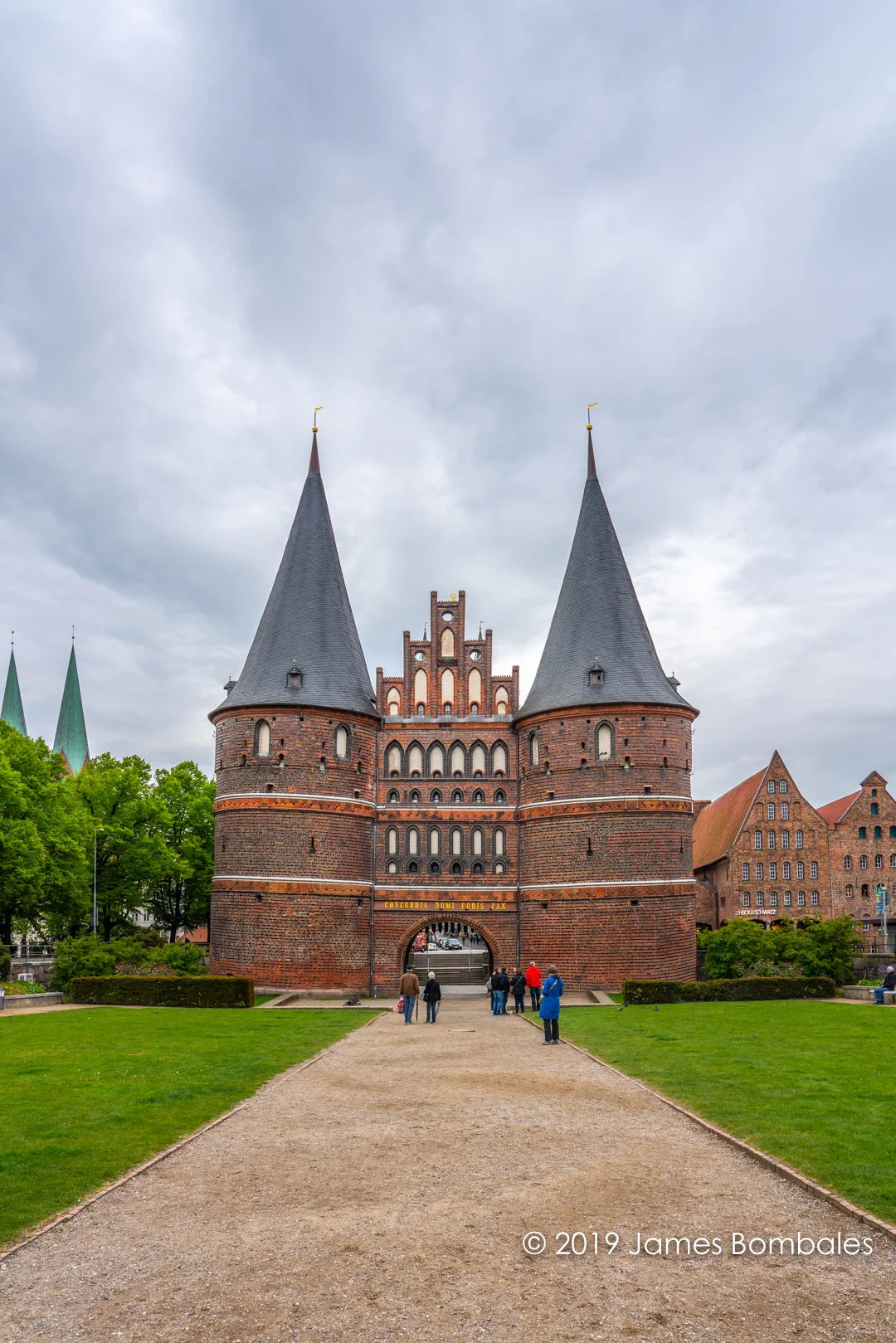
Holstentor
If you’re arriving in Lübeck by, train the Holstentor will likely be your first major stop on your way into the Altstadt (old town). Built in the 1400s, the Brick Gothic structure is one of the two remaining towered gates from the town’s medieval fortifications. Its iconic twin towers and arched gateway make it one of Germany’s most famous buildings and the perfect starting point for exploring Lübeck.
Salzspeicher
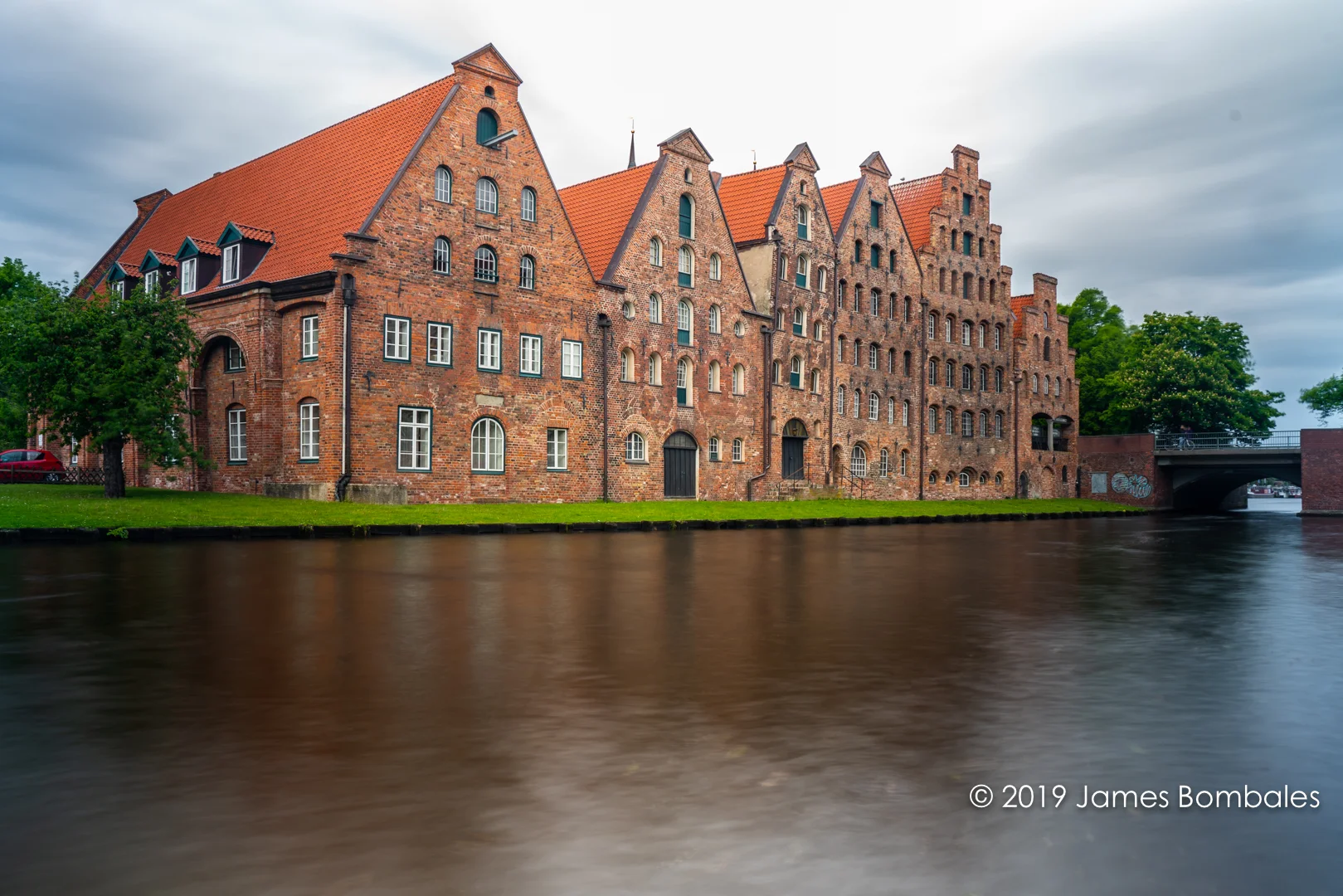
Salzspeicher
Just around the corner from Holstentor are these six stunning buildings known as the Salzspeicher or salt storehouses. Built in the 1500s, the Salzspeicher houses were used to store salt that was mined near Lüneburg and brought to Lübeck over the Stecknitz Canal. Fun fact: It was also where the 1922 movie Nosferatu was filmed.
Petrikirche (St. Peter’s Church)
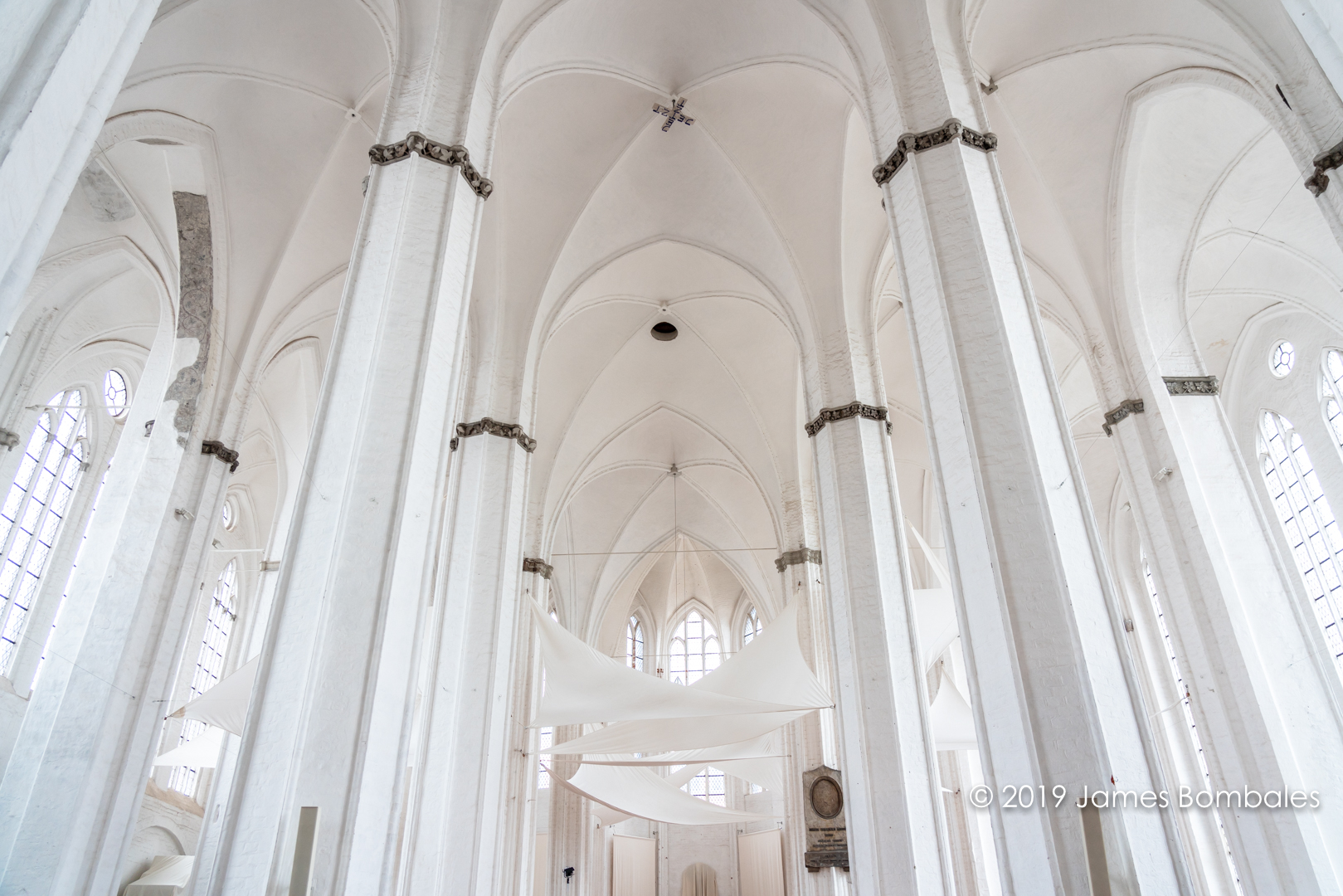
Petrikirche interior
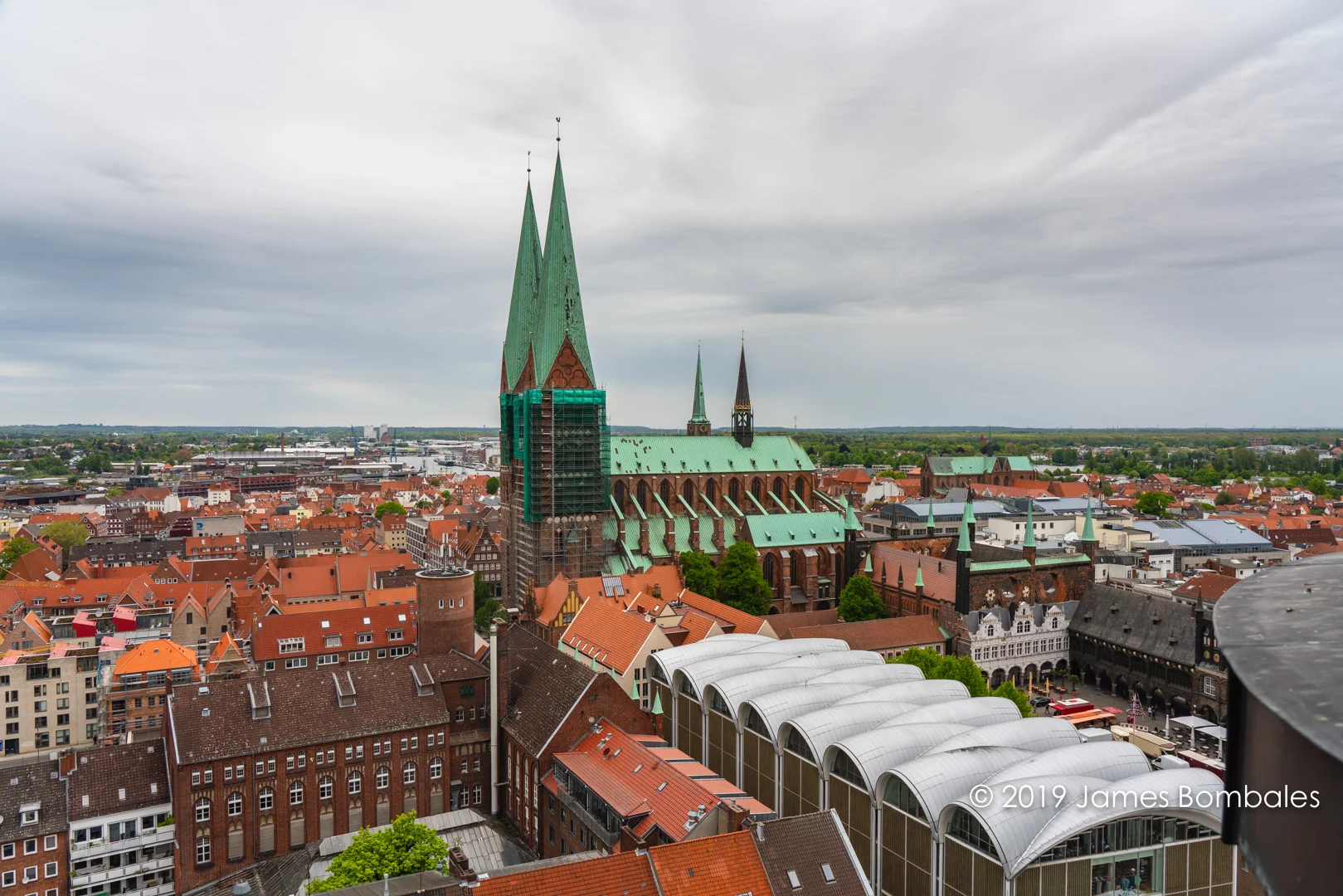
View from Petrikirche towards Marienkirche
Lübeck is sometimes called the city of the seven towers for its five churches. One of these is the Petrikirche, or St. Peter’s Church. The building is no longer an active church and is now used for cultural events and exhibitions.
And while its white and bright interior is a sight to see, you’re going to want to take the elevator (€ 4.00) up the tower to the observation deck. Here you’ll be greeted with sweeping views of Lübeck and a great vantage point to see many of the town’s famous landmarks.
Rathaus
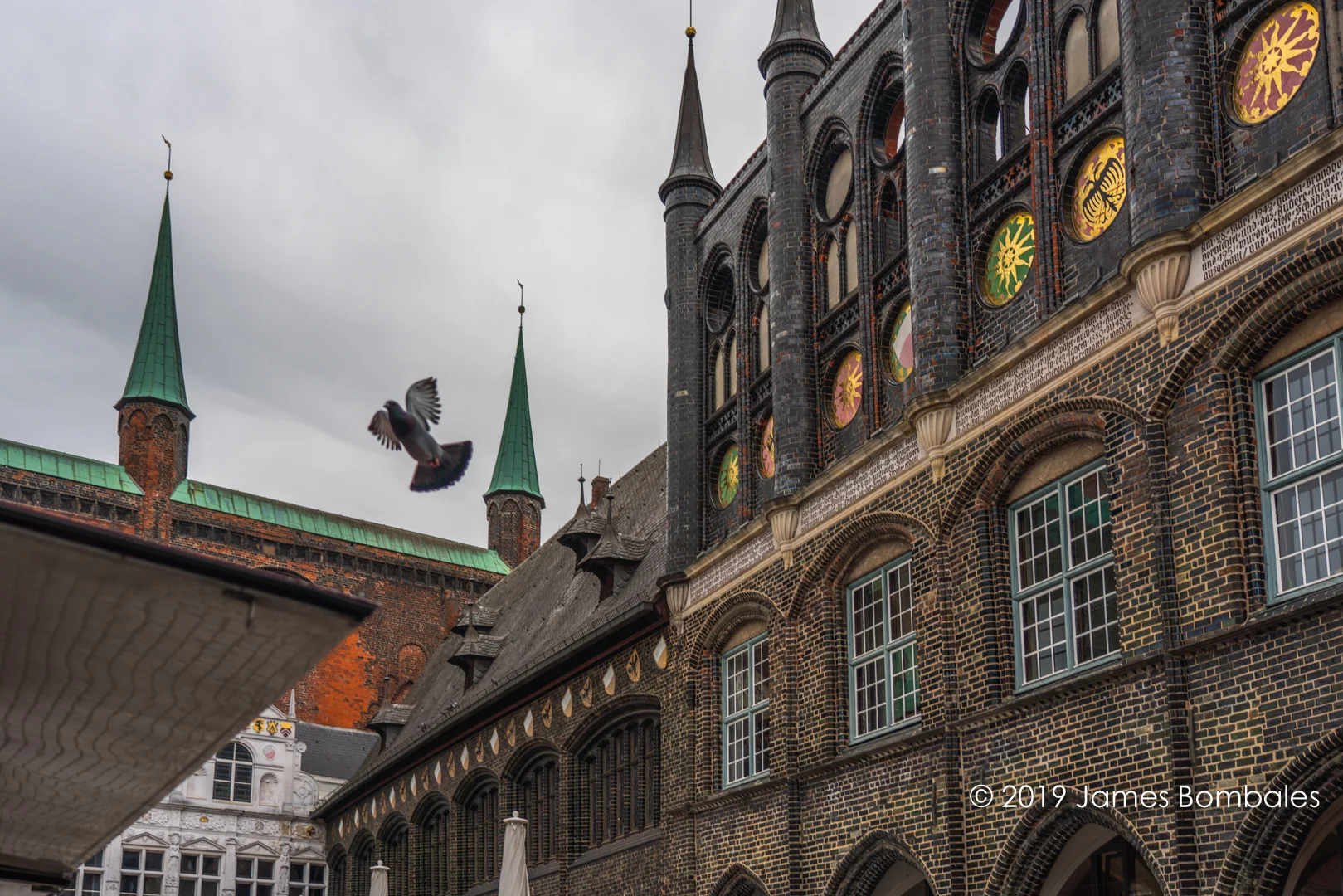

No German adventure is complete with seeing a city’s rathaus or town hall. Lübeck’s town hall is a complex of medieval buildings that began construction in the 13th century. Take a minute to admire the dark brick facade on the Markt side, along with the 16th-century Dutch Renaissance staircase located on the exterior facing Breite Straße.
Marienkirche (St. Mary’s Church)
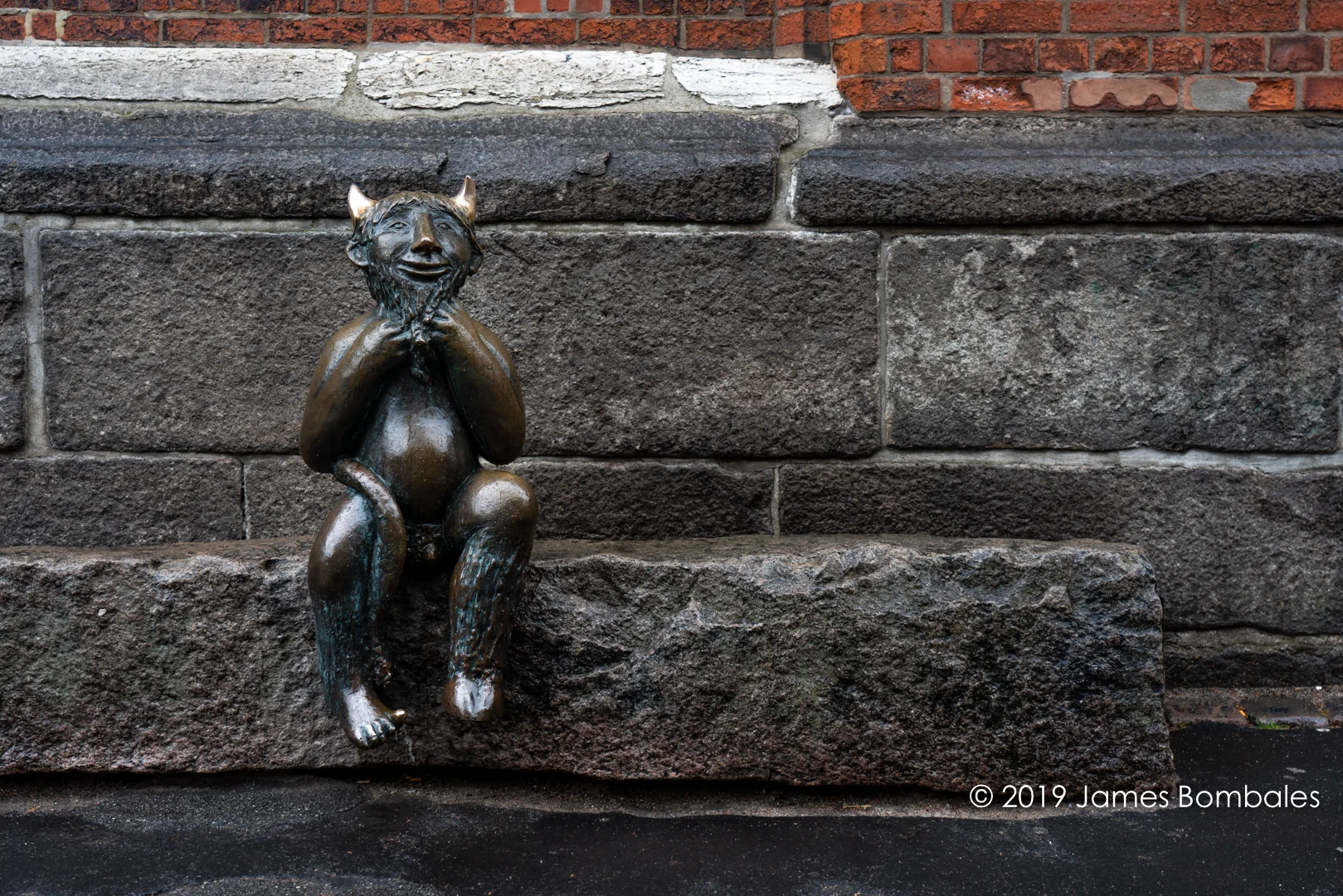
Devil sculpture at Marienkirche
Known as the mother church of Brick Gothic architecture, St. Mary’s was the first church that used the Gothic cathedral style found in France and adapted it using local brick. Outside the church is a sculpture of the devil that honours the local legend that the devil helped build the church after being lied to and told that the people were building a large bar/tavern. He only realized that he was tricked when the church was nearly finished and in his rage threatened to destroy it with a huge boulder. However, before he could, the people promised to build a tavern (the Ratskeller) next door which satisfied the devil causing him to drop the slab of rock. The devil now sits atop the boulder in the sculpture created by artist Rolf Goerle, located just beside the church.
Courtyards and alleyways
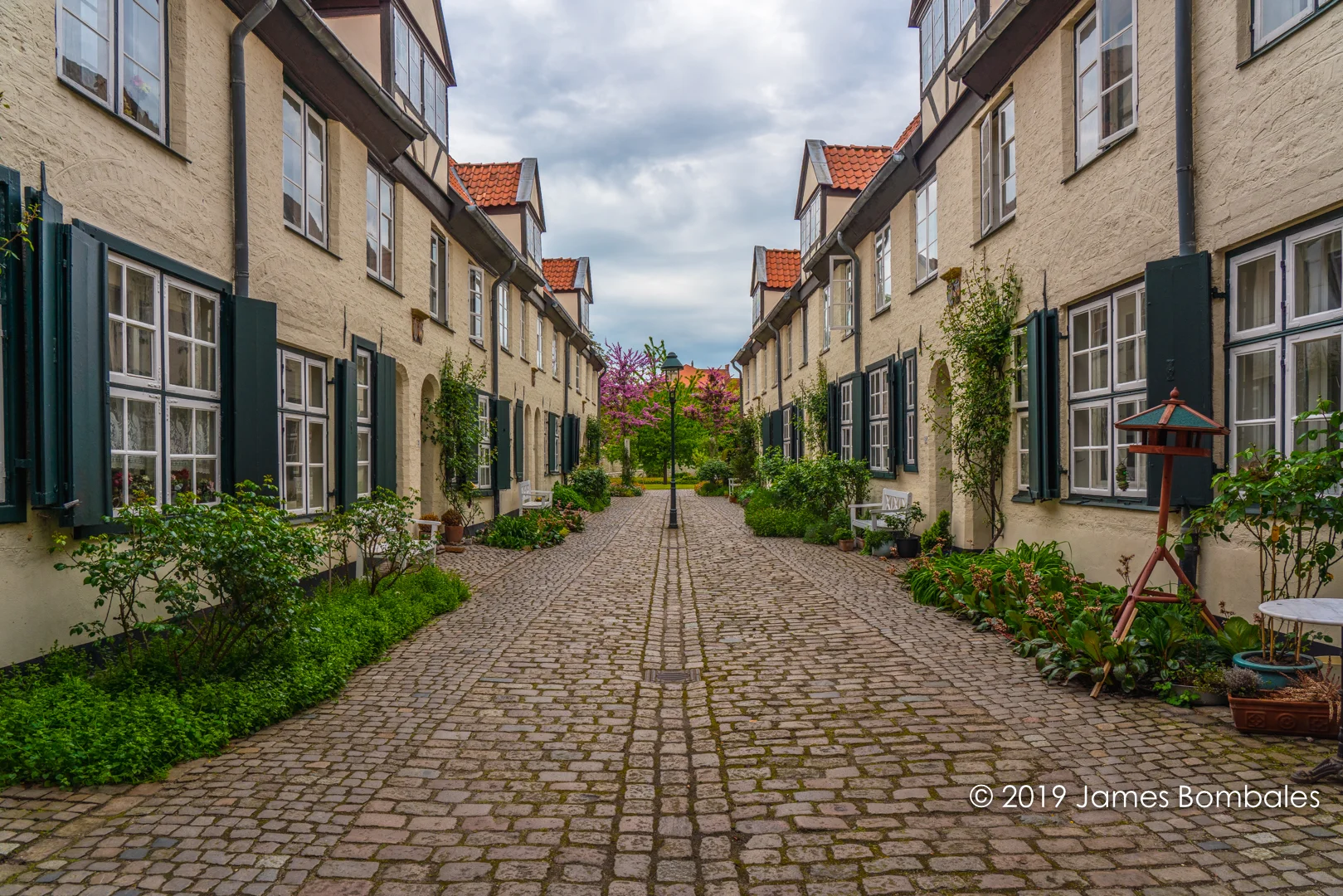
German towns like Lübeck are great places to walk around and explore. Lübeck in particular is dotted with colourful courtyards and alleyways that are the remnants of the town’s medieval urban development roots. Some courtyards are harder to find or access and many are actually closed to the public at certain hours of the day, but the picturesque homes and beautifully manicured courtyards and gardens are well worth the effort.
To see more of my travel and architecture photography visit jamesbombales.com and be sure to follow along on Instagram.