

Photos: James Bombales
(Originally published in Livable.com)
Whether you’re selling your home or want to show off a newly decorated space to friends and family, you need to take sharp, well-composed photos that show your home’s appeal. Hiring an experienced professional is always an option (especially if you’re selling a pricey property) but if you’re on a tight budget or just want to share your space on Instagram, you may want to tackle the task yourself. To help you get started, we’ve compiled 8 simple tips to follow to capture the perfect Instagram-able home photo.
1. Declutter your space

There’s nothing worse than taking the perfect photo of your space only to notice a distracting object in the foreground or background after your shoot. Spend some time on decluttering and organizing to save yourself a headache and having to retake the shot. Some things to look out for while prepping include remote controls on the coffee table, crooked lampshades, children’s toys on the floor and electrical cords.
2. Stage the scene

Beyond removing objects and decluttering, you should add some decorative elements to create a sense of style and visual interest. This doesn’t mean you have to go out and purchase a new couch or coffee table. Little things like filling a bowl with fresh fruit, adding a vase with flowers or turning on a fireplace can add warmth or vibrancy to a scene.
3. Compose your shot

Before you press that shutter release, take a few minutes to carefully plan and compose your photo. Think about what you want the photo to say or the mood you want to convey. Use simple photography techniques like the rule of thirds by visually dividing the scene into two horizontal lines and two vertical lines. Then position the subject(s) along those lines or at the points where they intersect. This creates a composition that’s more interesting and pleasing to the eye compared to having the subject directly in the centre of the frame. And don’t be afraid to move furniture or position yourself in various spots to get the composition you want.
4. Use a tripod

Blurry photos caused by camera shake are a photographer's worst nightmare. No matter how steady you think your hands are, indoor light conditions are rarely ideal for handheld photos. At first glance the image on your camera’s small LCD screen might look sharp, but zooming in may reveal motion blur caused by a slower shutter speed that allows more light to hit the sensor. To make sure your photos are always clean and sharp, use a tripod or place your camera on a flat, sturdy surface. And make sure to activate your camera’s timer as even the slightest movement -- like your finger pressing the shutter release -- can cause a little bit of shake.
5. Use as much natural light as possible
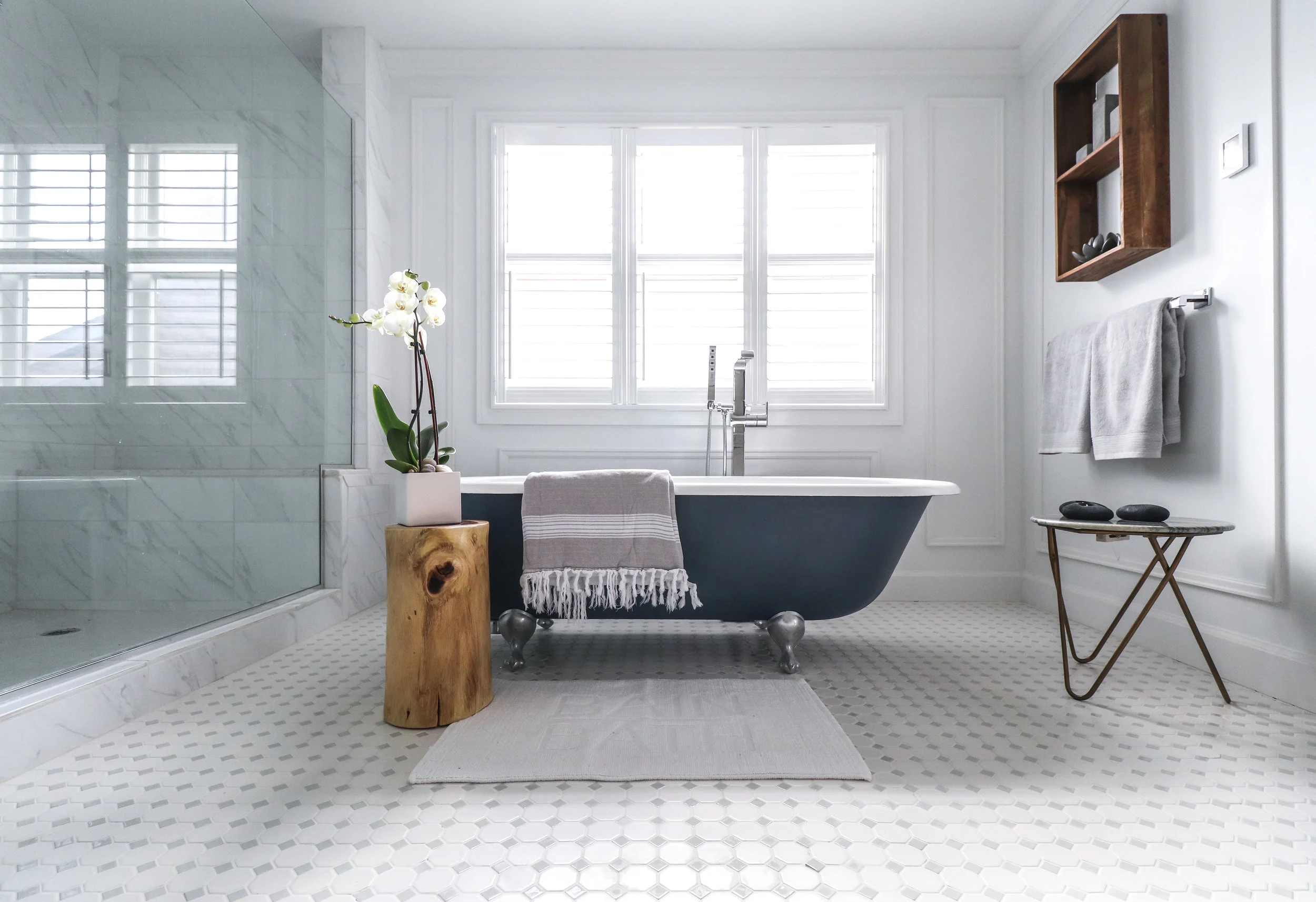
Indoor lights can cast unwanted shadows and create white balance issues caused by incandescent light bulbs so it’s best to use natural light whenever possible. Make sure to open up curtains, raise blinds and try to shoot during the day. If it’s still too dark, you may need to use a flash. But beware of using the on-camera flash; they’re not powerful enough to properly light a room and often create unattractive shadows. In these cases, try to use fixtures like LED pot lights that emit a cooler (less yellow) color temperature or an inexpensive LED light panel to fill in dark corners.
6. Shoot at a lower height

When you’re taking a photo, your natural inclination is to take it from eye level while in a standing position. But when you’re shooting an interior scene, a standing position will cause you to tilt the camera down which skews the verticals and creates image distortion. Instead, lower your tripod and use your camera’s level to shoot straight and even at the subject.
7. Mind your mirrors (and other reflective surfaces)

You don’t have to spend a lot of time on scrolling through home listings to find some bad real estate photography. A common mistake is seeing the photographer’s reflection in a bathroom mirror or glare from a camera flash. To avoid this, try shooting from a different spot in the room or kneel down to avoid the mirror above a bathroom vanity.
8. Use a wide angle lens but don’t be afraid to get up close

Wide angle lenses are great for interior photography since wider shots allow you to capture the entire space while providing a better sense of depth and detail. However, don’t forget to shoot vignettes and closeups, especially if you want to highlight a particular object or feature of your home.

In order to get the silky smooth blurred background (ie. bokeh) that photographers crave, set your camera to aperture priority mode and shoot at a wider aperture by setting a lower f-stop. Aperture is essentially the hole or opening within a lens that allows light to travel into the camera and its sensor. A wider aperture lets in more light creating a photo with a shallower depth of field where everything behind your subject is out of focus and blurred.